
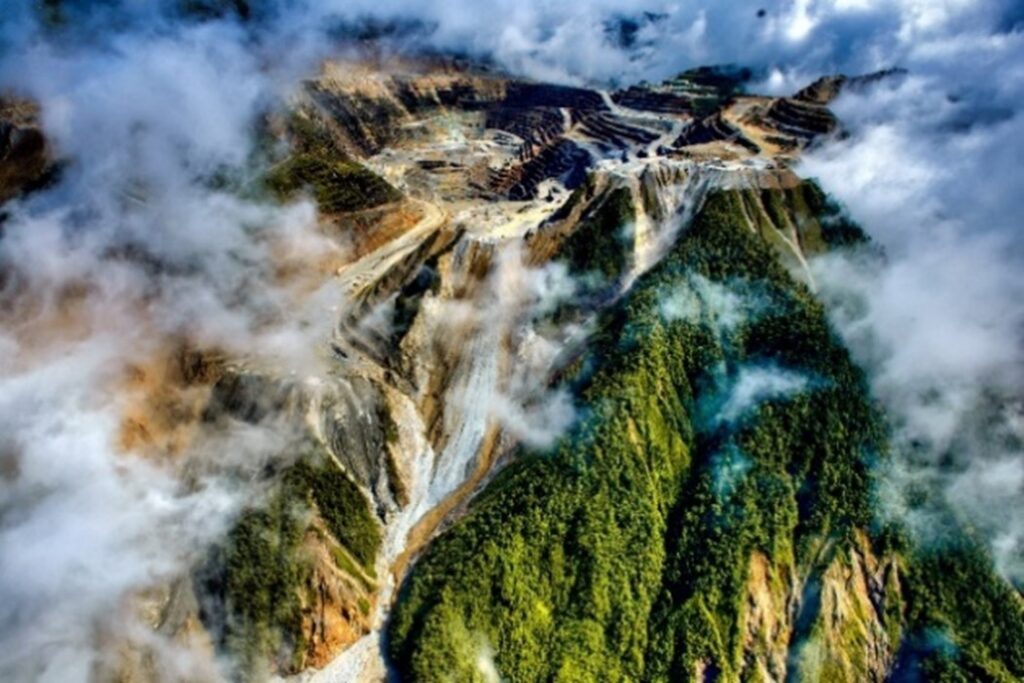
Ok Tedi Mining Limited (Ok Tedi) is one of Papua New Guinea’s great copper–gold success stories – a 100 percent nationally owned operation that has been delivering value to the Western Province and the wider PNG economy for more than four decades. Operating the country’s longest running open‑pit copper, gold and silver mine at Mt Fubilan, Ok Tedi has proved that a PNG‑owned resources company can compete at international standards while keeping national development at the centre of its mission.
From its base at Tabubil, Ok Tedi runs a fully integrated mine, processing and logistics operation in one of the most remote and challenging regions in the Asia–Pacific. The company processes up to 24 million tonnes of ore a year and produces copper–gold concentrate for smelters in major manufacturing economies across Asia and Europe, returning all of its sales revenue to Papua New Guinea. With a workforce of roughly 1,800 permanent employees and a similar number of contractors – the vast majority Papua New Guinean – the mine is a cornerstone of jobs, skills and regional infrastructure in Western Province.
Safety as a defining strength
Safety is one of Ok Tedi’s defining strengths and a core value that shapes every aspect of the operation. The company’s “Nobody Gets Hurt, Zero Harm” vision is supported by an integrated risk management system, a dedicated Environment, Safety & Governance (ESG) Board committee and a sustained focus on frontline safety leadership. Practical tools such as Take 5, Job Safety Analyses, Critical Controls and Life Saving Rules are embedded in day‑to‑day work, backed by regular toolbox talks, visible leadership walk‑arounds and targeted coaching to address real‑world risks like fatigue and distraction.
Ok Tedi is also using technology to lift safety performance. Through advanced operator training and analytics, the company monitors equipment use, identifies high‑risk behaviours and tailors training to improve both safety and machine care. This data‑driven approach is strengthening safety culture, building personal accountability and supporting continuous improvement across the mine, processing plant and logistics chain.
A major engine of the PNG economy
As a fully PNG‑owned company, Ok Tedi is a major engine of the national economy and a vital source of foreign exchange. In recent years, the company has provided on average more than US$600 million in foreign currency each year to the PNG market – a crucial contribution to the country’s balance of payments and financial stability. In 2025, Ok Tedi recorded revenues of around K8.3 billion (about US$2.3 billion), supported by solid production, strong metal prices and disciplined cost control.
These results translate directly into benefits for the State, Western Province, landowners and communities. In 2025 alone, Ok Tedi paid K1.09 billion in taxes, K178 million in royalties and K99 million in compensation, alongside K37 million invested in training and K766 million delivered through the Tax Credit Scheme for roads, schools, health facilities and other infrastructure. Dividends of about K1 billion (approximately US$240 million) flowed to its PNG shareholders, underlining the company’s role as one of the country’s most important economic assets. Over the life of the mine, Ok Tedi has contributed billions of kina in wages, procurement, community programs and fiscal payments, consistently ranking among PNG’s largest contributors to GDP and export earnings.
Investing in people, communities and the environment
Ok Tedi’s long‑term success rests on its investment in people, communities and environmental performance. The company’s Growth 2050 strategy measures success across safety, financial results, social development and environmental stewardship, reflecting a broad view of value creation for Papua New Guinea. Apprenticeship and graduate development programs, as well as a new University Talent Management system, are building a strong pipeline of national talent across technical, professional and leadership roles.
At the community level, Ok Tedi supports education, health and infrastructure in mine‑associated areas and the wider region. Recent initiatives range from support for new schools and scholarships to the “Lighting Up the West” program, delivered with the National Energy Authority, which aims to expand access to reliable, clean energy across Western, West Sepik and East Sepik Provinces. Environmental performance is supported by a dedicated dredging and rehabilitation facility at Bige, where river sediments are removed and stored in engineered stockpiles to reduce downstream impact. Ok Tedi has also committed to pursuing carbon neutrality by 2050, aligning its decarbonisation plans with Papua New Guinea’s Paris Agreement goals.
A trusted partner in the drive to net zero – ConnectOre
Beyond the mine gate, Ok Tedi plays an important role in the broader copper industry and in the global transition to net zero. The company has been a key member of the International Copper Association Australia (ICAA) for many years, contributing its experience as a major PNG copper producer to industry discussions on sustainable mining, market development and responsible supply chains. In that time it has become a valued supporter and partner in ICAA’s drive to net zero emissions, including through the ConnectOre program, which promotes the role of responsibly produced copper in electrification, renewable energy and low‑carbon technologies across the region.
This partnership reflects the shared belief that copper is essential to cleaner energy systems and that the way copper is produced matters. Ok Tedi’s focus on safety, environmental performance, community development and decarbonisation fits squarely with ICAA’s Roadmap to Zero program.
As Papua New Guinea celebrates 50 years of independence, Ok Tedi stands out as a national company delivering world‑class copper–gold production, strong safety performance and genuine, long‑term value for the people of Papua New Guinea and the global clean‑energy transition.